What is Compositing in VFX?
Compositing is the process of combining multiple visual elements like live-action footage (plate), CGI, matte paintings, and effects into a single seamless shot. If done right, the audience never questions it.
In simple terms:
Compositing is the art of making the impossible look real.
Why Learn Nuke for Compositing?
Nuke is the industry standard for professional compositing.
Key advantages:
– Node-based workflow (non-destructive & flexible)
– Used in films, OTT shows, and ads
– Handles complex multi-layered shots
– Powerful tools for keying, tracking, and color grading
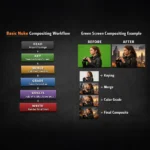
Understanding the Basic Nuke Workflow
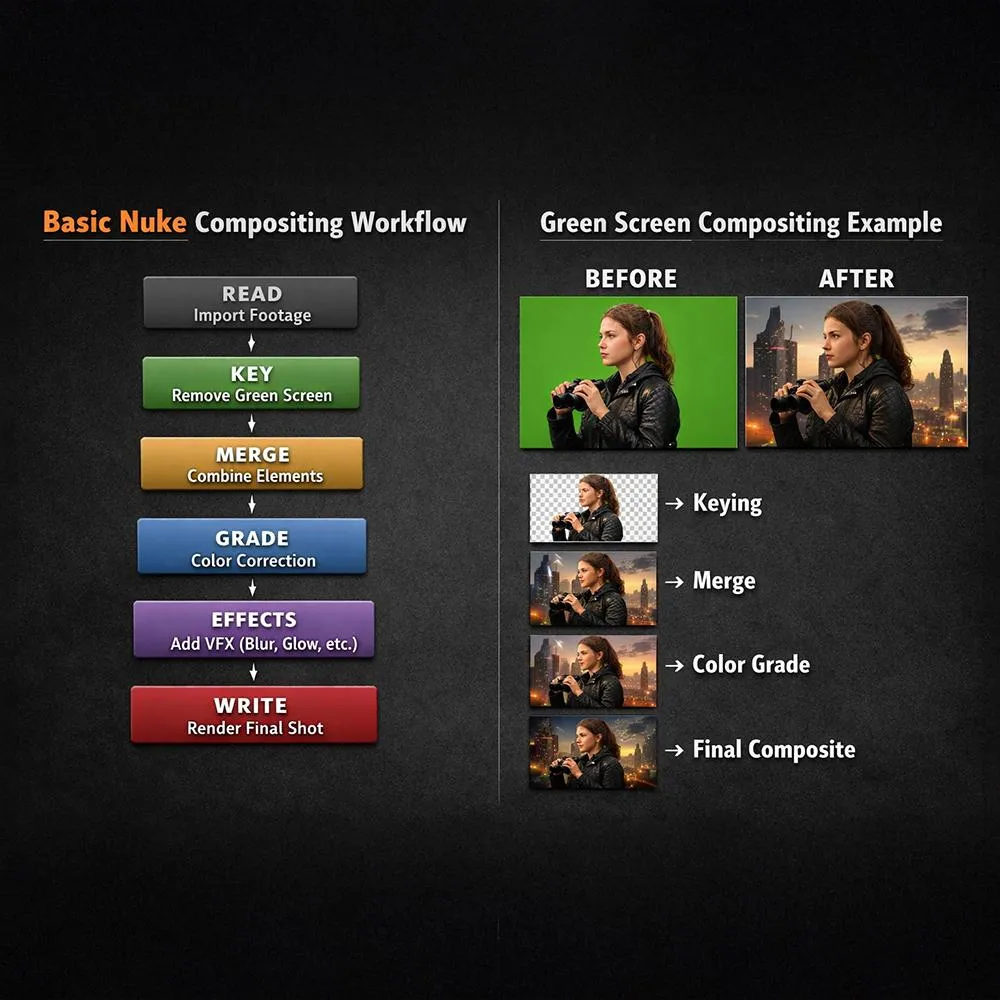
1. Read Node (Import Footage)
Import your plate and elements.
2. Keying
Remove green screen using nodes like Keyer, Primatte, IBK.
3. Merge Node
Combine subject and background.
4. Color Correction & Grading
Match exposure, contrast, and color.
5. Effects
Add motion blur, depth of field, light wrap, grain.
6. Write Node
Render final output.
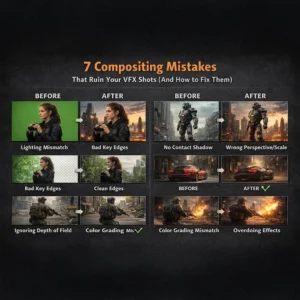
Common Beginner Mistakes
– Lighting mismatch
– Missing shadows
– Over-sharpened edges
– Poor color matching
– Messy node graph
Simple Example
Steps:
1. Import footage
2. Key green screen
3. Merge with background
4. Match colors
5. Add effects
6. Render
Pro Tips
– Observe real-world lighting
– Keep node graph clean
– Practice with real shots
– Use references
– Focus on realism
Why Compositing is a Powerful Career Skill
– Final stage of VFX pipeline
– High demand skill
– Strong creative control
Final Thoughts
Compositing transforms raw elements into cinematic visuals. Start simple, stay consistent, and keep improving your eye for detail.